
Nelson Mandela’s family tree
Nelson Mandela was born in 1918 and died, aged 95, in 2013. His family tree remains, growing from three wives and six children to 17 grandchildren, 19 great-grandchildren and on …
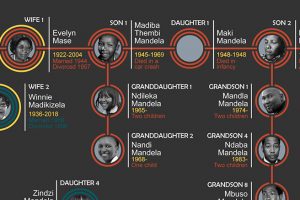
Nelson Mandela was born in 1918 and died, aged 95, in 2013. His family tree remains, growing from three wives and six children to 17 grandchildren, 19 great-grandchildren and on …

Nelson Mandela and Oliver Tambo were friends for 60 years, from student days to partnership in a law firm, through imprisonment and exile, until the final victory over apartheid.

They have found important fossils in the human family. They have no degrees but instruct visiting researchers. Now the fossil technicians of the Sterkfontein Caves may get the recognition they deserve.

Robert Sobukwe was one of South Africa’s greatest but forgotten heroes of the struggle for human rights and nonracialism.

If we abandon 1652 – when Dutch settlers arrived at the Cape – as the historical starting point and go back a thousand years, a different story emerges.

It took one day for young South Africans to change the course of the country’s history. The day was 16 June 1976. Here is an hour-by-hour account of the 1976 Soweto students’ uprising.

A comprehensive timeline of the life of Nelson Rolihlahla Mandela – revolutionary, soldier, political prisoner, president of South Africa, statesman and global icon of social justice.
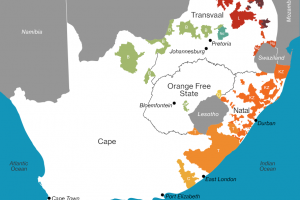
Before South Africa’s 1996 constitution, the country was divided into four provinces set aside for white people, and 10 “homelands”, tiny states designated for black people.

They’ve been dismissed as mongrels, “township dogs”, and worse. But as a breed they are smart, tough, athletic, loyal – and ancient. They are the Africanis, the dog of Africa.

Charting South Africans’ life expectancy is to track the country’s modern history. In 1960, when the state was grimly implementing apartheid laws, an average newborn child was expected to have a lifespan of only 52 years – 50 years for boys. In 2015, life expectancy was 62 years.
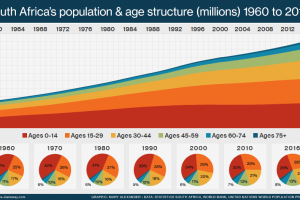
There’s a lot of talk of South Africa’s population being dominated by the youth. But we’re less youthful than we have been for decades. The end of apartheid, better healthcare, widespread social welfare and greater economic opportunities all mean South Africans are now able to live longer lives.

From 1960 to the late 1980s, apartheid laws kept families and communities in poor rural areas. Young men alone were allowed to move to the cities, where their labour was valuable. After the end of apartheid, from the mid-1990s, urbanisation increased rapidly.

Life on Earth needs oxygen to survive, right? Maybe not. A South African scientist and his colleagues have discovered the remains of giant bacteria that flourished on our planet billions of years ago – breathing sulphur.


You must be logged in to post a comment.